When it comes to mechanical tree trimming, few names carry as much weight as Jarraff. Since 1978, Jarraff has been the benchmark for all-terrain tree trimmers — machines trusted by utility companies, municipalities, pipeline crews, and forestry contractors across the country. And at the heart of every Jarraff trimmer is the component that does the actual work: the saw blade. Today we're taking a deep dive into the 24" Jarraff Saw Blade — what makes it tick, why it matters, and how to get the most out of it on the job.
What is the 24" Jarraff Saw Blade?
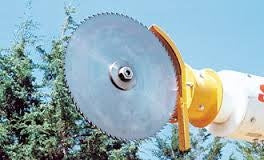
The 24" Jarraff Saw Blade is a carbide-tipped circular saw blade purpose-built for Jarraff tree trimmers. It's not an aftermarket guess — it's the blade that Jarraff machines are designed around. Here are the key specs at a glance:
- Diameter: 24 inches
- Number of Teeth: 72 carbide-tipped teeth
- Bore Size: 1-1/2 inches
- Plate Thickness: .180 inches
- Kerf: .260 inches
- Material: High-carbon steel plate with carbide teeth
- Weight: 23 lbs
These dimensions aren't arbitrary. Every measurement is engineered to work with the rotational speed, mounting system, and cutting demands of Jarraff tree trimmers.
Why Carbide Teeth Matter
If you've spent any time around saw blades, you know that carbide is the gold standard for longevity and cutting performance. But why does it matter so much in tree trimming specifically?
Tree trimming is brutal on cutting edges. Unlike cutting clean, dry lumber in a mill, a tree trimmer is slicing through green wood, branches with embedded bark, wet sapwood, and the occasional hidden rock or debris at the base of a tree. A standard steel tooth would dull in minutes under those conditions.
Carbide teeth — made from tungsten carbide — are significantly harder than steel. They hold their edge through thousands of cuts, handle the unpredictable abuse of field conditions, and stay sharp long enough to make a real difference in productivity and safety. With 72 carbide teeth around the perimeter of a 24" blade, you're getting a cutting tool that's been built to handle the worst that nature throws at it.
The Jarraff Machine: Built Since 1978
To understand why the 24" blade is what it is, it helps to know a little about the machine it's designed for. Jarraff tree trimmers have been in production since 1978, and the brand has earned its reputation the hard way — by working in some of the toughest terrain and conditions in the country.
Modern Jarraff trimmers feature a few key specs that directly affect how the saw blade performs:
75-foot reach. The telescoping dielectric fiberglass boom gives operators the ability to reach branches high up in the canopy without climbing. That means the blade is doing all the work — cutting cleanly at height where hand tools and chainsaws simply can't go safely.
180° rotatable saw head. The saw head can swing a full 180 degrees, giving the operator the ability to approach branches from multiple angles. This puts a lot of demand on the blade — it needs to cut cleanly and consistently regardless of the angle of attack.
3,000 RPM operation. The blade spins at up to 3,000 revolutions per minute. At that speed, every tooth needs to be sharp and every edge needs to be balanced. A dull or damaged blade at 3,000 RPM isn't just inefficient — it's dangerous.
Dielectric compliance. Jarraff trimmers are built to ANSI 92.2 Category C dielectric standards, which means they're designed to be safe to operate near energized power lines. This is critical for utility line clearance work, which is one of the biggest markets for these machines.
Where Jarraff Tree Trimmers Go to Work
Understanding the applications helps you appreciate why the blade needs to be as tough as it is. Jarraff trimmers — and by extension, the 24" saw blade — show up in some demanding situations:
Utility line clearance is probably the single biggest application. Electric, gas, and communications companies need the vegetation around their lines trimmed back on a regular schedule. Jarraff trimmers can reach high into the canopy and cut precisely, keeping crews off the ground and away from energized lines.
Pipeline right-of-way maintenance is another major use. Pipeline companies need to keep vegetation managed along hundreds of miles of pipeline corridors. A Jarraff trimmer can move through a right-of-way far faster than hand crews, and the 24" blade handles the variety of tree sizes encountered along the way.
Municipal and roadside trimming keeps roads clear and neighborhoods safe. Trees that grow too close to roads, sidewalks, or houses become liability issues, and Jarraff trimmers handle this work efficiently — especially in tight spaces where the Mini Jarraff model shines.
Forestry and land management rounds out the picture. State and federal forestry agencies, timber companies, and private landowners all use mechanical trimmers for vegetation management, fire break maintenance, and general land clearing.
Why the 24" Blade is the Sweet Spot
Jarraff trimmers have been offered in different configurations over the years, but the 24" blade has become the standard for good reason. It strikes the right balance between reach and power.
A larger blade would cut a wider swath, but it would also add weight to the boom head, increase the load on the hydraulic system, and require more power to spin up to operating speed. A smaller blade would be lighter and faster to get moving, but it would struggle with thicker branches and reduce the operator's ability to cut efficiently at the full reach of the boom.
At 24 inches, the blade can handle branches up to roughly the diameter of the blade itself — which covers the vast majority of the trimming work these machines are designed for. It's heavy enough to power through green hardwood without bogging down, and light enough at 23 lbs that it doesn't throw the balance of the boom head.
Keeping Your Blade Sharp: Maintenance Tips
A sharp blade is a safe blade, and a safe blade is a productive blade. Here's how to keep your 24" Jarraff saw blade performing at its best:
Inspect before every use. Before you fire up the trimmer, take a close look at the blade. Check each tooth for chips, cracks, or excessive wear. A single damaged tooth can cause vibration, kickback, and uneven cuts — none of which you want at 3,000 RPM.
Keep it clean. Sap, wood fiber, and debris build up on the plate and between teeth. This buildup adds weight, creates friction, and reduces cutting efficiency. Wipe the blade down at the end of each work day or between jobs.
Watch for signs of dullness. If the blade is starting to drag through branches instead of cutting cleanly, or if you're noticing more vibration than usual, it's time to think about sharpening or replacement. Carbide teeth can be professionally sharpened, but there's a limit to how many times that's practical before the tooth geometry is compromised.
Know when to replace. Carbide teeth are tough, but they don't last forever. If you're seeing consistent performance degradation even after sharpening, or if multiple teeth have been damaged, it's time for a new blade. Running a worn-out blade isn't just less productive — it puts the operator and the machine at risk.
Watch what you're cutting. Rocks, metal debris, and other hard objects hiding in brush or at the base of trees are the number one cause of premature tooth damage. If the ground around your work area is rocky or littered with debris, slow down and be more deliberate with your cuts.
Installation and Fitment
The 24" Jarraff Saw Blade is designed as a direct fit for Jarraff tree trimmers. The 1-1/2" bore matches the spindle on Jarraff machines, and the plate dimensions (.180 thickness, .260 kerf) are matched to the saw housing and guard geometry.
Installation is straightforward — it's essentially a bolt-on replacement. That said, a few things to keep in mind:
Always refer to your specific Jarraff trimmer model's owner's manual for the exact installation procedure. Torque specs and mounting hardware can vary between models and production years.
Make sure the blade is properly centered on the spindle before spinning it up. An off-center blade will vibrate, wear unevenly, and put unnecessary stress on the bearings.
After installing a new blade, run it at low speed for a short break-in period before going to full RPM. This lets everything settle and lets you confirm there's no vibration or interference before you start cutting.
The Cost of Cutting Corners
A 24" carbide-tipped saw blade isn't the cheapest line item on the equipment budget. But when you factor in what it's doing — cutting trees at 3,000 RPM, sometimes near energized power lines, often in rough terrain — the cost of a quality blade is a small fraction of what a failure would cost.
A blade failure mid-cut can send fragments flying at high speed. A dull blade causes the operator to force cuts, which increases the risk of binding and kickback. And a machine that's struggling to cut because of a worn blade is a machine that's taking longer to do the job — which means higher labor costs, missed deadlines, and frustrated customers.
The 24" Jarraff Saw Blade is an investment in the productivity and safety of your operation. Buy the right blade, maintain it properly, and replace it when it's time. It's that simple.
Who Needs This Blade?
If any of the following describe your operation, the 24" Jarraff Saw Blade belongs in your parts inventory:
Utility contractors doing line clearance work for power, gas, or telecom companies. This is the bread and butter of Jarraff trimmers, and keeping a spare blade on hand means no downtime when one wears out or gets damaged.
Pipeline companies maintaining right-of-way corridors. Vegetation grows fast, especially in the Southeast and along waterways. A sharp blade keeps the mower moving.
Municipal forestry crews managing trees along roads, in parks, and in residential neighborhoods. Municipalities can't afford equipment downtime, and having replacement blades stocked means the trimmer stays productive.
Forestry and land management operations that use mechanical trimmers for large-scale vegetation management. Whether it's fire break maintenance, timber land prep, or general clearing, a fresh blade makes the difference between an efficient day and a frustrating one.
Tree service companies that have added a Jarraff to their fleet. Mechanical trimming complements traditional tree care services and lets a small crew handle jobs that would otherwise require a much larger hand crew.
Available at CSP Forestry & Supply
We stock the 24" Jarraff Saw Blade here at CSP Forestry & Supply, and we ship fast. Whether you need a replacement blade because yours is worn, or you're stocking up for a busy season, we've got you covered.
Why buy from CSP Forestry?
- We've been supplying the forestry and tree care industry since 1986
- The 24" Jarraff Saw Blade is in stock and ready to ship
- Competitive pricing on all forestry equipment and supplies
- Our team knows these products and can help you make sure you're getting the right blade for your machine
- Fast shipping so your trimmer isn't sitting idle
Don't let a dull or worn blade slow you down. Head over to CSP Forestry & Supply and get your replacement blade today.
Order now at www.cspforestry.com or call 1-800-592-6940.
About Jarraff
Since 1978, Jarraff has been manufacturing all-terrain tree trimmers built for the toughest conditions in the field. Now part of the Prinoth family, Jarraff trimmers remain the go-to choice for utility contractors, pipeline companies, municipalities, and forestry professionals who need reliable, high-reach mechanical trimming.
About CSP Forestry & Supply
Since 1986, CSP Forestry & Supply has been a trusted source for professional-grade forestry, logging, sawmill, and outdoor supplies across the United States. We stock trusted brands, offer competitive pricing, and back it all up with the expertise that comes from nearly four decades in the industry. Visit us at www.cspforestry.com or call 1-800-592-6940.
Keywords: Jarraff saw blade, 24 inch saw blade, tree trimmer blade, carbide saw blade, Jarraff tree trimmer, utility line clearance, mechanical tree trimming, forestry equipment, replacement saw blade, vegetation management